

 Français
 Deutsch
 Italiano
 Português
 Español
 简体中文
简体中文
Kundalini Yoga
Known as the Yoga of Awareness,
Kundalini Yoga is a comprehensive
technology that combines precise kriyas
and meditation to help individuals
thrive in modern life.
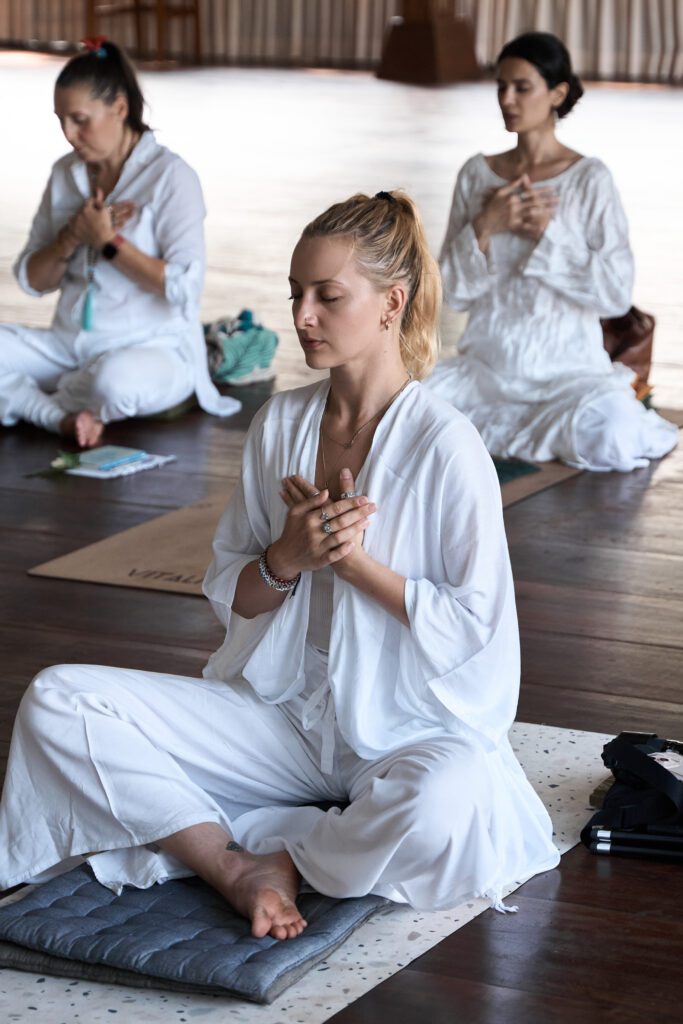

What is Kundalini?
The word kundalini is often translated as “the curl of the lock of hair of the Beloved.” This poetic expression refers to the creative life force and spiritual potential within every human being.
According to the yogic tradition, kundalini energy rests at the base of the spine. When awakened through the disciplined practice of Kundalini Yoga, this energy rises through the central channel, expanding consciousness and awakening a more profound experience of awareness and connection to the Infinite.
Kundalini is not something we acquire; it is our inherent potential. The practice of Kundalini Yoga provides tools to awaken, direct, and embody that potential in everyday life.
Do I need previous yoga experience to practice Kundalini Yoga?
No. Kundalini Yoga is accessible to people of all ages, backgrounds, and experience levels. Classes can be adapted to meet individual needs, and beginners are always welcomed.
What makes Kundalini Yoga different from other forms of yoga?
Kundalini Yoga uses kriyas, precise sequences of postures, movement, breathwork, mantra, and meditation, designed to produce specific effects on the body, mind, and energy.
These kriyas are traditionally taught and practiced as they were originally given, preserving the integrity of the technology and providing a systematic approach to personal growth, vitality, awareness, and spiritual development.
What Is a Kriya?
A kriya is a precise sequence of exercises, breathing techniques, meditations, and focused awareness designed to produce a specific effect.
Thousands of kriyas have been taught within the tradition, each serving a unique purpose—from building vitality and strengthening the nervous system to cultivating intuition, emotional balance, or meditative awareness.
This extensive body of teachings allows practitioners and teachers to apply specific tools to different stages and challenges of life.
Is Kundalini Yoga a religious practice?
Kundalini Yoga is a spiritual practice, but it is not tied to any particular religion and does not require adherence to a specific faith or belief system.
The teachings draw from the broader yogic tradition and include practices such as meditation, mantra, breathwork, and self-reflection that support personal growth and expanded awareness. People from many different religious backgrounds—as well as those with no religious affiliation—practice Kundalini Yoga and integrate its tools into their own lives and spiritual paths.
The focus of Kundalini Yoga is direct experience: cultivating awareness and a deeper connection to oneself, regardless of one’s religious or cultural background.
Why do some people wear a turban when practicing Kundalini Yoga?
Wearing a turban is a traditional practice in Kundalini Yoga, but it is not required. Many practitioners choose to wear a turban or head covering because they find it supports focus, awareness, and the overall experience of practice.
According to tradition, a properly tied turban applies gentle pressure to specific areas of the head, creating an effect similar to acupressure that may help enhance concentration and mental clarity during meditation and yoga practice.
The crown of the head, sometimes referred to as the Tenth Gate in yogic teachings, is considered an important energetic center. Because many Kundalini Yoga practices are designed to stimulate and direct energy, wearing a turban or headcover is a way of supporting and protecting this energetic space.
Beyond its practical and energetic aspects, the turban can also serve as a reminder of one’s commitment to awareness, discipline, and conscious living.
While many teachers and practitioners choose to wear a turban, others do not. The benefits of Kundalini Yoga are available to everyone, regardless of whether they wear a head covering.
Is Kundalini Yoga safe?
Kundalini Yoga as taught by Yogi Bhajan® is a safe and effective practice that has been taught to people of all ages, backgrounds, and levels of experience around the world for decades.
Students should communicate any injuries, medical conditions, or physical limitations to their teacher so that appropriate modifications can be offered when needed. Kundalini Yoga can often be adapted to meet a wide range of needs and abilities, allowing practitioners to participate safely while receiving the benefits of the technology.